There’s something magical about learning a new language. It feels a bit like moving to another country inside your own head: new sounds, new words, new ways of thinking.
Many people postpone it. They say, “I’ll start when I have time. When I have money. When I find a course.”
But the truth is simpler: you can start today. For free, from home, with what you already have.
Use What’s Already Out There
We live in a time where you can learn almost anything without spending a cent, Dutch included. You just need to know where to look.
There are great websites full of exercises, texts and explanations:
- NT2taalmenu.nl – clear exercises by level.
- NT2oefenen.nl – short texts, grammar, and exam training.
The secret isn’t in the website, but in the habit. Fifteen minutes of practice every day beats one hour once a week. Small doses of language, repeated daily. You’ll only notice the difference when someone suddenly says, “Hey, your Dutch sounds good!”
Listen, Read, Speak
You don’t learn a language just by looking at it. You have to live in it. Listen to the radio, to podcasts, to people on the bus. Read short texts in the newspaper you can understand right away. Say what you hear. Repeat sentences. Sing along to a Dutch song, even if you sing off-key.
Language isn’t only in words. It’s in sound, in rhythm, in courage.
Use What You Learn Right Away
New words are like groceries: they spoil if you let them sit too long.
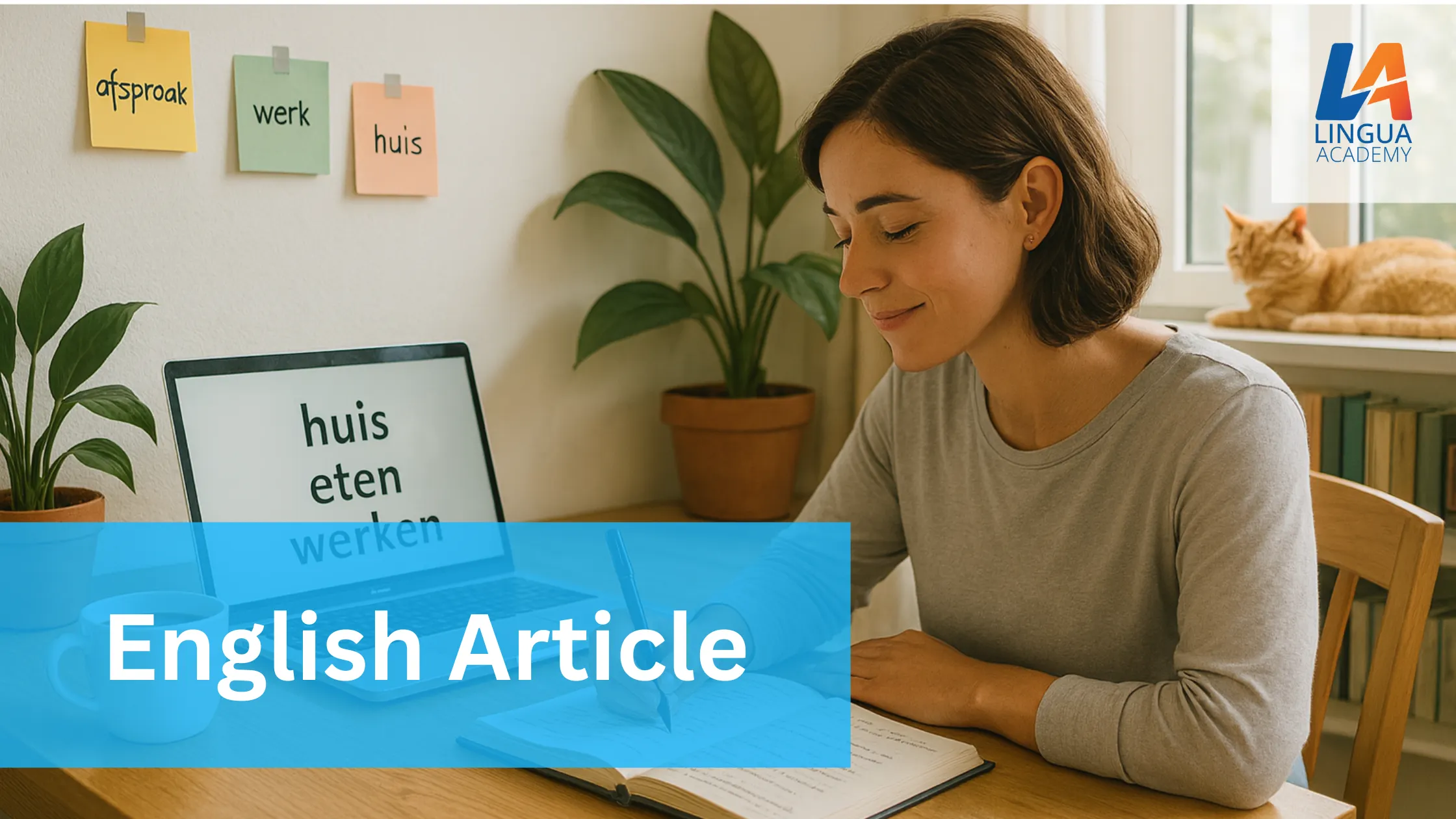
Learn the word afspraak today? Use it tomorrow.Say at work: “Ik heb een afspraak met mijn collega.” (“I have an appointment with my colleague.”)
Use words that fit your own life, not just the textbook. That’s how language sticks, like a song you can’t get out of your head.
Don’t Be Afraid to Make Mistakes
Everyone makes mistakes. Dutch people too. The difference is: they don’t lose sleep over them.
Say what you want to say, even if it isn’t perfect. No one expects you to sound like a news anchor. People prefer enthusiasm over perfect grammar. (And honestly, they usually admire you for trying.)
Set Small Goals
Not: I want to speak Dutch. That’s too big, too vague, too far away.
Say instead: This week I’ll learn ten words about work. Or: By the end of this month I’ll be able to have a two-minute conversation.
Small goals, big impact. They give you direction, structure, and satisfaction. And that makes learning fun.
Finally
You don’t learn a language in a few days. But every day counts. You’re slowly building something new. Today one more exercise, tomorrow a new word, next week a sentence that rolls off your tongue naturally.
Next in this series: How to turn your home into a language lab, no books or courses needed.
And if it’s hard to do it alone? You’re welcome at Lingua Academy for a free hybrid trial lesson a mix of online learning and real classroom interaction.
You can join from home through live video sessions, or come to our school in Rotterdam. You’ll practice with real teachers and classmates, wherever you are.
Visit www.lingua-academy.nl
Remember: you don’t have to be good to start, you get good by starting.