Insulation projects in the Netherlands are becoming more complex. Contractors and insulation companies are expected to deliver high standards of safety, quality, and efficiency—often under tight timelines and with increasingly diverse teams. In this environment, communication on the work floor plays a far bigger role than many organisations initially realise.
At Hamrah, this challenge is visible across construction and industrial sectors. Technical skill alone is no longer enough. When insulators struggle to understand instructions, safety briefings, or work orders in Dutch, productivity slows and risks increase. This is why professional Dutch language training is increasingly viewed as a strategic investment, not a soft skill.
Language as a Safety Factor on Construction Sites
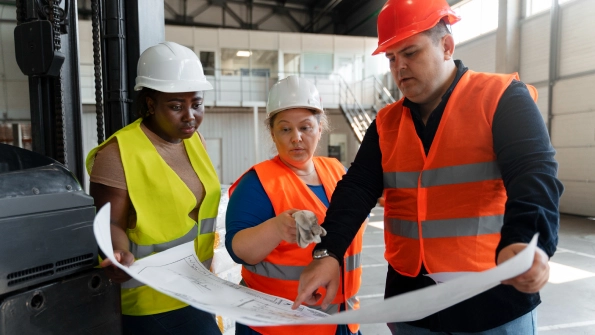
Construction and industrial insulation work involves working at height, handling hazardous materials, and coordinating with multiple trades. Safety procedures, toolbox meetings, and emergency instructions are typically communicated in Dutch. If this communication is unclear, even experienced workers can make mistakes.
From Hamrah’s experience, safety incidents related to language are rarely dramatic at first. Instead, they appear as hesitation, incomplete understanding, or silence when workers do not feel confident speaking Dutch. Over time, these small gaps can lead to unsafe behaviour or near misses.
Professional Dutch language proficiency supports safety by enabling workers to:
- Fully understand safety briefings and toolbox talks
- Follow PPE and equipment instructions accurately
- Report unsafe situations or near incidents clearly
- Ask questions when something is unclear
- Communicate calmly in high-risk situations
For employers, strengthening Dutch language skills directly contributes to risk reduction and compliance.
The Impact of Language on Productivity and Workflow
Productivity on insulation projects depends heavily on coordination. Tasks must be prepared correctly, materials handled efficiently, and work sequenced logically. When communication breaks down, delays and rework often follow.
Hamrah frequently sees that when insulators lack professional Dutch language skills, supervisors spend extra time repeating instructions or correcting misunderstandings. This increases pressure on team leaders and slows down overall project progress.
Clear Dutch workplace communication helps:
- Reduce errors in measurements and material use
- Improve coordination between trades
- Speed up onboarding of new workers
- Enable workers to operate independently
- Minimise downtime caused by miscommunication
Language, in this sense, becomes an operational efficiency factor.
Why General Language Courses Do Not Solve Workplace Problems
Many employers refer workers to general Dutch language courses, hoping this will solve communication challenges. While well intentioned, this approach often has limited impact on the work floor.
General courses focus on grammar and everyday conversation. They do not train workers to communicate in safety-critical, technical, or time-pressured situations. As a result, employees may complete a course but still struggle on site.
Hamrah’s Vaktaal approach is based on a simple insight:
language must be trained inside the profession to be effective.
This is especially true for insulation work, where language is closely tied to actions, tools, and safety procedures.
Professional Dutch Language Training as a Workforce Strategy
Professional Dutch language training for insulators is most effective when it is integrated into a broader workforce and safety strategy. Rather than treating language as an individual responsibility, forward-thinking employers treat it as a shared investment.
Hamrah supports organisations by aligning language training with:
- Real projects and work environments
- Company-specific safety procedures
- Materials, tools, and workflows used on site
- The actual communication style of supervisors
This ensures that training translates directly into better performance on the work floor.
Supporting Onboarding and Long-Term Employability
Many insulation companies rely on migrant and international workers to meet labour demands. While these workers bring valuable skills, onboarding can be challenging when language barriers exist.
Professional Dutch language training accelerates onboarding by:
- Helping workers understand expectations faster
- Reducing dependence on informal translation
- Building confidence in speaking up on site
- Supporting long-term integration into teams
From Hamrah’s perspective, this leads to more stable teams, lower turnover, and stronger project outcomes.
A Partnership Approach to Language Training
For contractors, municipalities, and insulation companies, professional Dutch language training works best as a partnership, not a one-off course. When language training is aligned with safety, quality, and productivity goals, it becomes part of organisational culture.
Hamrah works with organisations to:
- Deliver in-company training on site
- Adapt content to specific projects and risks
- Support both workers and supervisors
- Build consistent language standards across teams
This partnership model strengthens communication at every level.
Final Thought
In insulation projects, language is not a soft skill—it is a core operational factor.
Clear Dutch communication supports safety, productivity, and sustainable employment.
By investing in profession-specific Dutch language training, organisations strengthen not only individual workers, but the reliability and quality of their projects. That is where Hamrah positions itself: as a partner in practical, work-ready Dutch language training for the construction sector.